A low-risk zone is not a no-risk address
Radon is the health risk nobody in Texas talks about — an invisible, odorless radioactive gas that seeps from the soil into homes through slab cracks, plumbing penetrations and crawl spaces, and the second-leading cause of lung cancer in the United States behind smoking. North Texas sits in a lower-risk zone on the EPA's map, and that is exactly why elevated homes here go unfound: the map describes averages, not addresses, and homes over the action level of 4.0 picocuries per liter turn up in every part of the metroplex, sometimes next door to homes that test near zero. The only way to know a house's number is to test that house. We test Dallas homes with calibrated continuous monitors, fix the ones that need fixing with properly engineered mitigation systems, and put the result in writing — for your family, or for the relocation buyer whose contract demands it.
Dallas Radon Mitigation connects homeowners, buyers and agents across Dallas, Plano, Frisco and the northern suburbs with a local, insured radon professional. Calibrated 48-hour continuous monitor testing with a written report, transaction-speed scheduling when an option period is running, active soil depressurization systems installed and guaranteed to bring elevated homes under 4.0 pCi/L, crawl-space mitigation for pier-and-beam houses, and radon-ready rough-ins for new construction — the full measurement-to-mitigation path, explained in plain English at every step.
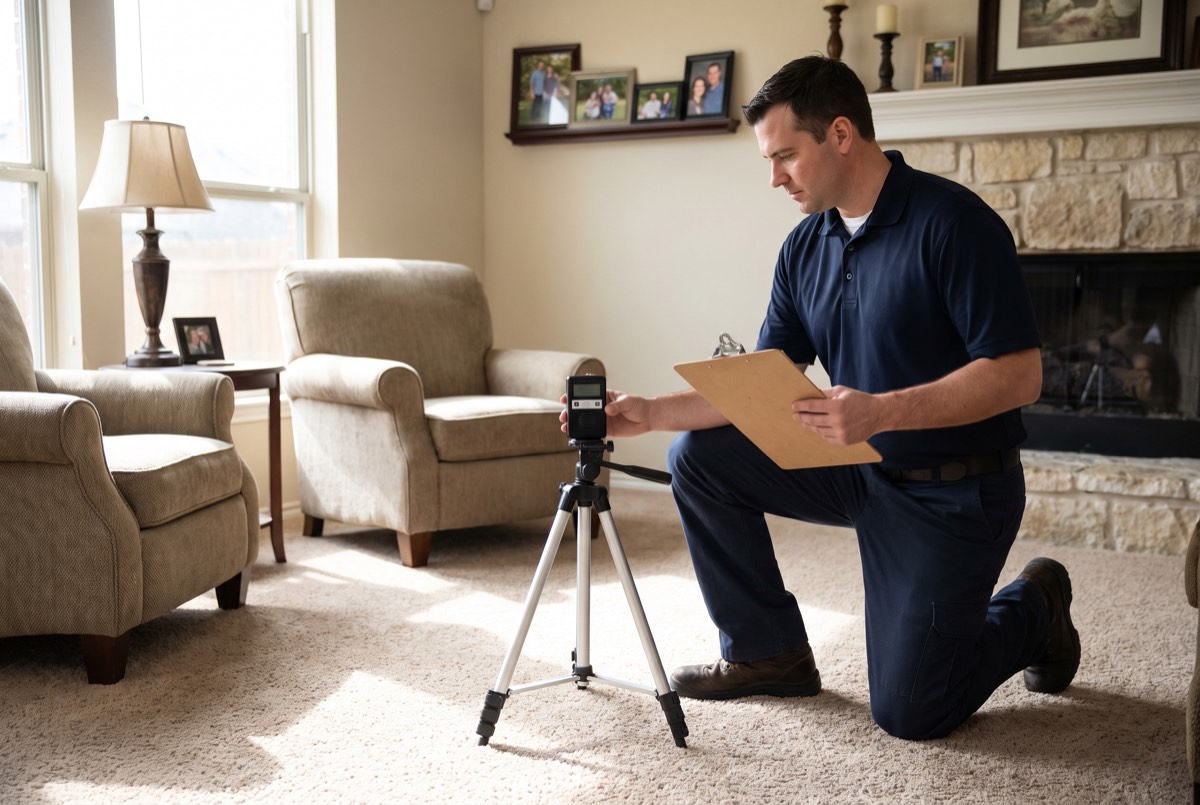
The 48-hour answer: a calibrated monitor in the lowest lived-in level, logging hour by hour.
What we handle
Radon Testing
A real radon test is not a coffee-can charcoal kit from the hardware store sitting on a shelf for a week.…
Radon Mitigation Systems
Radon mitigation is settled science done carefully: an active soil depressurization system puts gentle suction on the…
Real Estate Transaction Testing
Most radon phone calls in Dallas start with a contract clock. A buyer arriving from Ohio or Colorado - or their…
Crawl Space & Pier-and-Beam Mitigation
Dallas's most charming housing stock - the Tudors of the M Streets, Lakewood's cottages, the pier-and-beam…
New Construction & Radon-Ready Building
The cheapest radon system ever installed is the one roughed in while the slab is being poured. A radon-ready rough-in…
Commercial & Multifamily Radon
Radon does not check zoning. Ground-contact spaces in schools, daycares, offices and ground-floor apartments…
Why test in Dallas if the region is low-risk?
Three honest reasons. First, the map is an average: EPA zone ratings predict regional potential, not your slab — elevated homes appear throughout North Texas, driven by the geology and soil under each foundation. Second, relocation and lending: buyers arriving from radon-aware states and corporate relocation packages routinely require a radon test in the option period, and a surprise result with five days on the clock is a solvable problem only if someone answers the phone. Third, the test is cheap and the stakes are not: a calibrated 48-hour test costs about as much as a nice dinner, and the thing it screens for is lung cancer. Test once; know forever — or at least until you remodel the foundation.
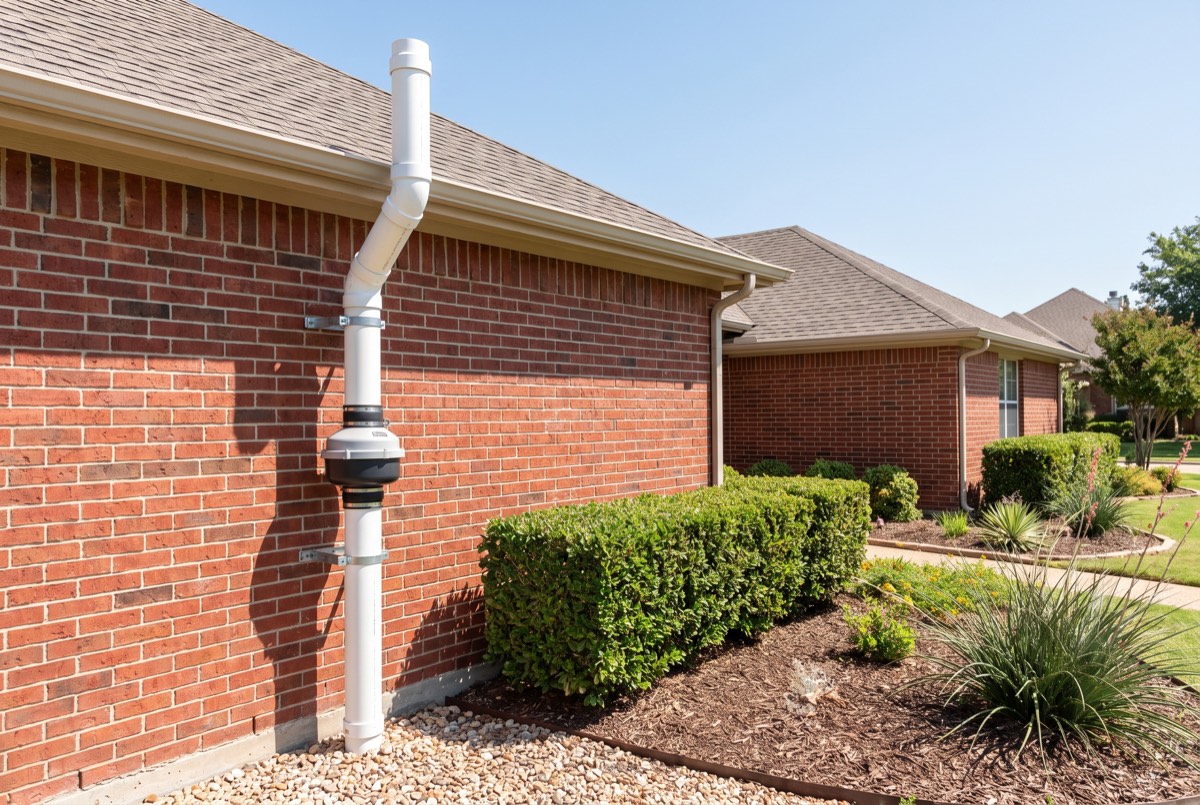
A finished system: quiet fan, clean routing, and a number that stopped being scary.
Where we go
Testing and mitigation across Dallas and the northern suburbs — where the corporate relocations land and the contracts demand numbers.
Dallas, TX
The whole city, slab and pier-and-beam alike - from East Dallas Tudors over crawl spaces to Preston…
Plano, TX
Corporate-relocation central - the buyers arriving with Toyota, JPMorgan and the rest bring radon…
Frisco, TX
New construction at scale - the smart radon money here goes into the slab, not onto it: rough-ins…
McKinney, TX
Historic square to brand-new subdivision in one city - century-old pier-and-beam near downtown,…
Richardson, TX
Telecom Corridor households and mid-century housing stock - '60s and '70s slabs whose owners are…
Irving, TX
Las Colinas corporate housing, apartment mid-rises and established neighborhoods - a mix of…
Garland, TX
One of the metro's biggest cities and quietly one of its best value housing markets - established…
Common questions
Is radon actually a problem in Dallas? I heard Texas is low-risk.
Both things are true. North Texas sits in a lower-potential zone on the EPA map, and most Dallas homes test fine — we say that freely. But zone maps average whole regions, and elevated homes appear across the metroplex without pattern, next door to homes that test near zero. Low-risk means fewer elevated homes, not none — and the only way to know which kind yours is, is a 48-hour test.
What is radon, and why should I care?
A naturally occurring radioactive gas from uranium breaking down in soil and rock. It drifts up through foundation cracks and openings, and in enclosed homes it can concentrate. It is invisible and odorless, and long-term exposure is the second-leading cause of lung cancer in the U.S. behind smoking — which is the entire reason this trade exists. Outdoors it disperses harmlessly; the question is only ever what is happening inside your house.
What do the numbers mean on a radon report?
Radon is measured in picocuries per liter (pCi/L). The U.S. average indoors is about 1.3; the EPA action level is 4.0, above which mitigation is recommended; between 2.0 and 4.0 the EPA suggests considering it. Our reports give you the 48-hour average, the hourly graph behind it, and a plain-English verdict — no scare formatting, no upsell math.
The buyer wants a radon test and our option period ends Friday. Can you make it?
This is our most common call, and yes — the service is built around contract clocks. A monitor drop is a short visit, the protocol needs 48 closed-house hours, and results go out the morning the monitor comes up. Call with the deadline and we schedule backward from it; if the result is elevated, the mitigation quote comes same-day so negotiation can use a real number.